
Blogs
Who Is Bruce Westrate? Meet the Historical Fiction Author Behind Altar of Ashes

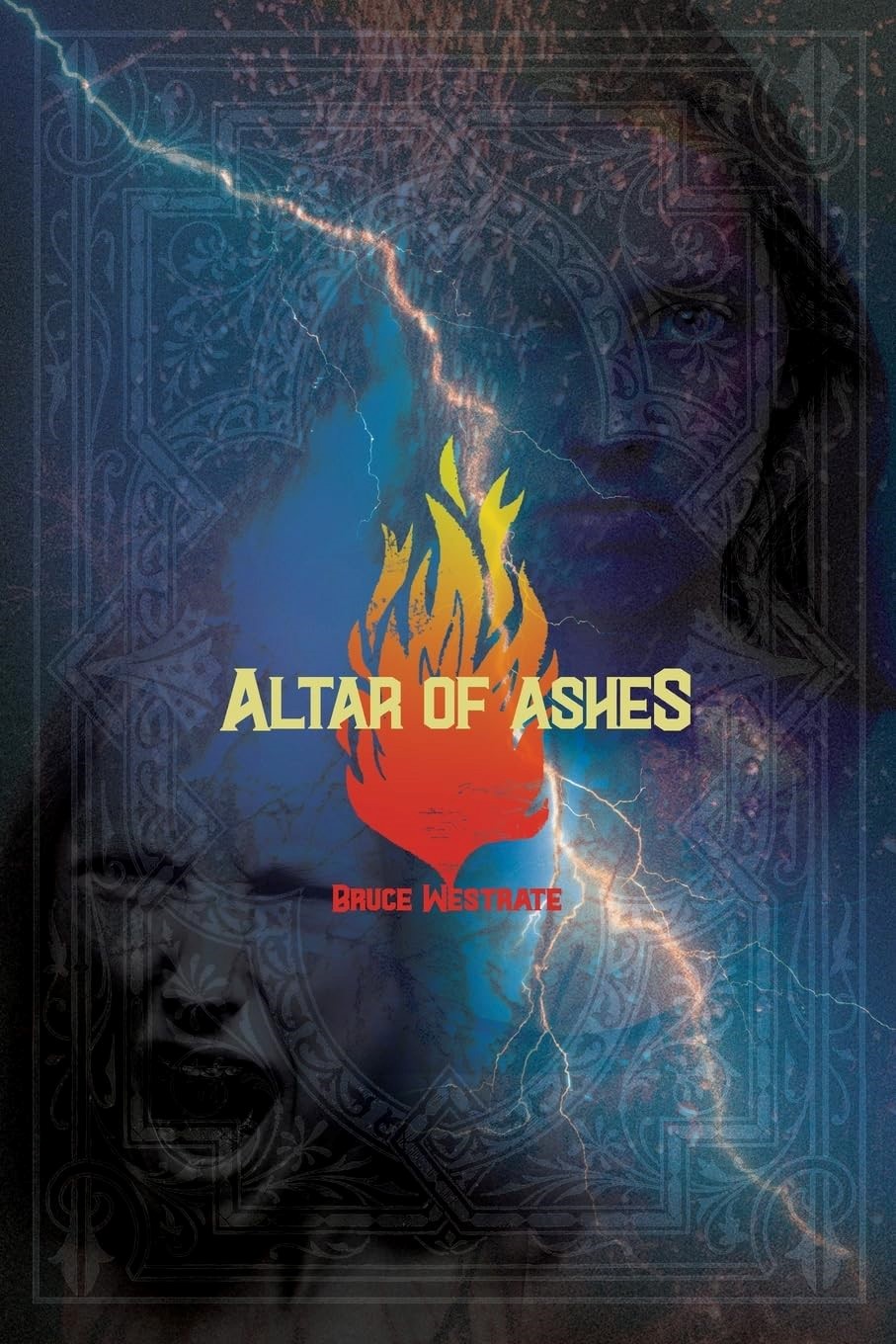
There are writers who come to fiction having spent their lives in the literary world — workshop graduates, MFA holders, reviewers and editors who move inevitably toward novel-writing. And then there are writers whose path to fiction runs through something far more unusual: decades of archival research, a family farm in rural Michigan, a teaching career in one of the country’s finest prep schools, and a slowly deepening conviction that the most urgent intellectual question of the age had never been properly confronted in the literary medium. Bruce Westrate is emphatically the second kind of writer.
A Scholar Rooted in the Land
Bruce Westrate grew up in rural southwestern Michigan, the fifth of six children in a farming family. The landscape of small-town rural America — its particular relationship to community, tradition, and the rhythms of agricultural life — shaped him in ways that are visible throughout Altar of Ashes. He spent his childhood working on the family farm, growing row crops and, more unusually, Christmas trees — a solitary enterprise that would continue to occupy him alongside his academic career for decades.
After high school, Westrate attended the University of Michigan at Ann Arbor, where he discovered the field that would define his intellectual life: British Imperial history. He accumulated three history degrees from Michigan, ultimately receiving his Ph.D. in 1982. His dissertation subject was the Arab Bureau — the Cairo intelligence unit that shepherded the Arab Revolt against the Ottoman Turks during World War I, a unit whose most famous member was T.E. Lawrence, “Lawrence of Arabia.”
This was not casual academic territory. Westrate traveled to the United Kingdom in 1980, spending months in the archives at Oxford, the Durham Archive, King’s College London, the India Office Archive, and the Public Record Office. His expanded dissertation was published by Penn State Press in 1992 to what he describes as “glowing international reviews” — a scholarly monograph on one of the most romantic and consequential intelligence operations of the twentieth century.
From Scholarship to the Classroom
While building his scholarly reputation, Westrate maintained adjunct teaching positions at Lake Michigan College, Purdue University North Central, Western Michigan University, and Indiana University South Bend. In 1997, he presented a paper on the practice of sati — the ritual immolation of Hindu widows — at the Western Conference on British Studies, and the same year received an NEH summer fellowship at the University of Texas under William Roger Louis, the editor-in-chief of the Oxford History of the British Empire.
From that seminar grew a chapter Westrate contributed to Rediscovering the British Empire (Krieger, 2002) — a scholarly treatment of the British abolition of sati in India in 1829. The subject would remain with him.
In 2003, his reputation from the NEH seminar led to an offer from St. Mark’s School of Texas — one of the country’s premier preparatory schools — where he was hired as a Master Teacher of the Humanities after a nationwide search. He has taught history there for over two decades.
The Long Road to Altar of Ashes
The novel that became Altar of Ashes germinated slowly, nourished by the solitary hours of the farming enterprise and the intellectual ferment of two decades of teaching. Inspired partly by Allan Bloom’s The Closing of the American Mind — a sweeping critique of the academic drift toward multiculturalism — Westrate began asking himself whether the literary medium could do what academic argument and public debate had failed to do: genuinely put the premise of multiculturalism in the dock, examining it with both intellectual rigor and dramatic power.
The parallel that seized his imagination was the great play Inherit the Wind — the dramatization of the Scopes Trial — which placed creationism, then a passionate and trendy cultural shibboleth, before the judgment of dramatic examination. Westrate aspired to do for multiculturalism what that play did for creationism: not to deliver a verdict, but to force the question seriously.
He finished the novel around 2014 and spent years searching for an agent willing to take on material the publishing industry found uncomfortable. In 2021, agent Maryann Karinch took it on. First published as Apotheosis, the novel was retitled Altar of Ashes after reflection and re-editing, and published through a press willing to engage seriously with its provocative premise.
The Man Behind the Work
Bruce Westrate lives in Dallas with his wife Sally and still owns the farmhouse in rural Michigan where he summers each year. Their daughter Molly is a publicist; their son Nicholas is a Juilliard graduate who has performed on Broadway, in television, and in film.
Westrate is a small-town boy who became a world-class scholar, a farmer who became a prep school master teacher, a specialist in British Imperial history who became a novelist. Altar of Ashes is the product of all of these lives simultaneously — a work whose depth, specificity, and intellectual courage reflect the full range of a remarkable American life.