
Blogs
The Inspiration Behind Altar of Ashes: How Bruce Westrate Came to Write His Most Daring Work

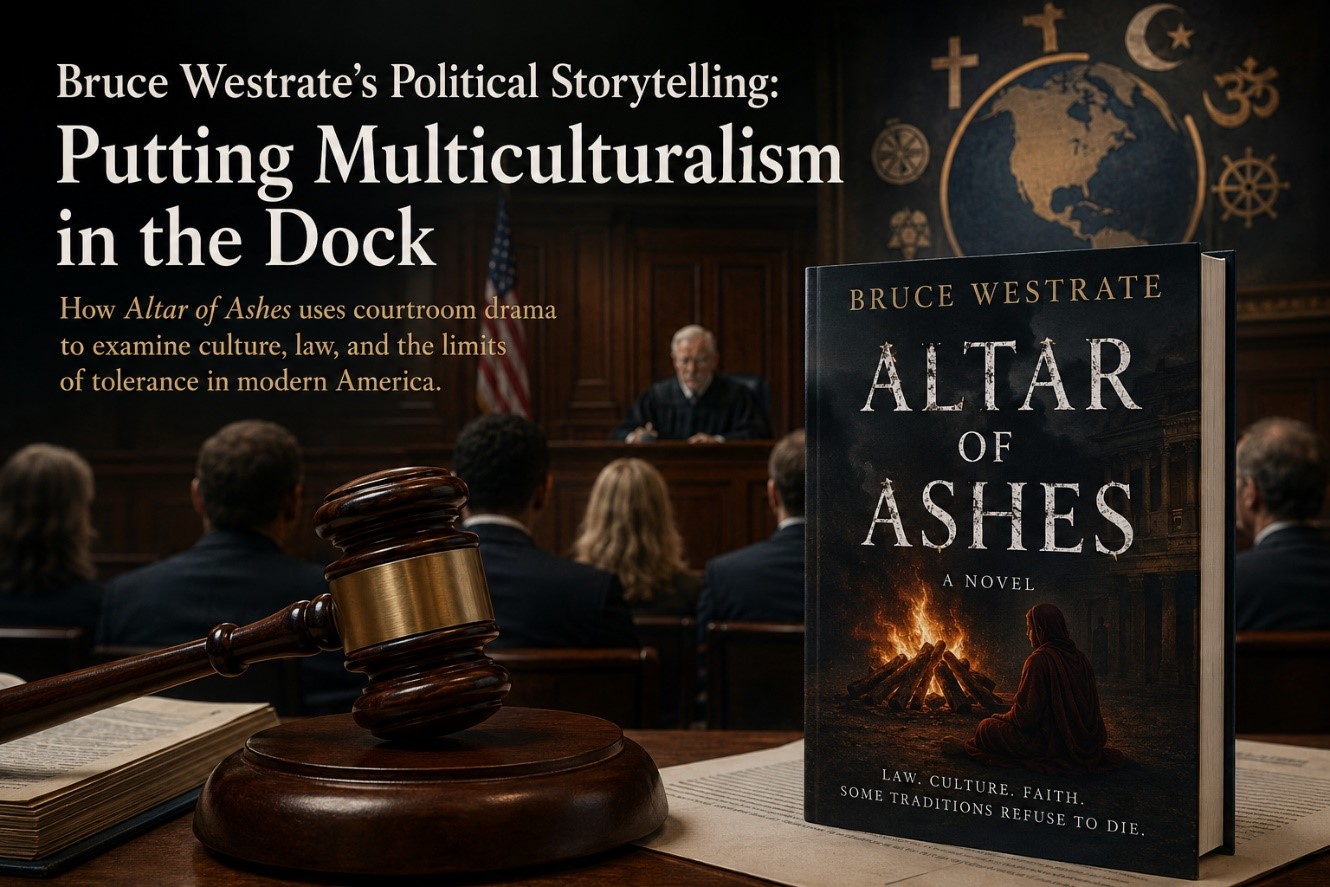
Every novel has a starting point, but not every starting point is easy to identify. For Bruce Westrate, the inspiration behind Altar of Ashes was not a single event, a chance conversation, or a sudden flash of insight. It was something slower and more deliberate: a long intellectual journey that began with frustration at the limitations of academic debate and ended with a novel that took on one of the most contested ideas of the modern era.
Understanding the inspiration behind Bruce Westrate novels requires understanding the intellectual forces that shaped their author. The most significant of these was a book, a teaching career, and a historian’s conviction that certain questions cannot be answered in scholarly journals alone.
The Book That Started Everything
One of the primary sources of the inspiration behind Bruce Westrate novels was Allan Bloom’s The Closing of the American Mind, published in 1987. Bloom’s book was a sweeping critique of American higher education, arguing that the academic embrace of cultural relativism had weakened the foundations of intellectual inquiry and moral reasoning.
The book had an enormous cultural impact, but it also frustrated Westrate in a productive way. Bloom had powerfully identified a problem, but he had done so through the medium of argument and polemic. What Westrate began to imagine was something different: a work that would not argue against multiculturalism but would put it on dramatic trial, forcing the idea to reveal its tensions and contradictions through lived human experience.
From Academic Frustration to Literary Ambition
The inspiration behind Bruce Westrate novels is also rooted in his long teaching career. Two decades in the classroom at St. Mark’s School of Texas, where Westrate has taught history since 2003, gave him a front-row seat to the cultural changes that multiculturalism had wrought in American education. He saw how students were taught to think about culture, identity, and moral judgment, and he saw what those frameworks could and could not address.
Teaching is an excellent preparation for writing serious fiction. It forces clarity, rewards patience, and demands that complex ideas be made accessible without being oversimplified. These qualities are visible on every page of Altar of Ashes.
The Search for a Model
Another essential element of the inspiration behind Bruce Westrate novels is the model of Inherit the Wind, the 1955 play by Jerome Lawrence and Robert E. Lee. That play dramatized the 1925 Scopes Monkey Trial, in which a Tennessee teacher was prosecuted for teaching evolution. The play did not argue for or against evolution; it put the question on stage and let the dramatic form do the intellectual work.
Westrate recognized that this was the approach he needed. The courtroom could become a space where the contradictions of multiculturalism could be displayed, not through editorializing, but through the pressure of legal examination, character conflict, and the unfolding of a dramatic narrative.
The Novel That Emerged
The result of this long process of incubation was first Apotheosis, then, after careful revision and retitling, Altar of Ashes. The novel retains the intellectual seriousness of its origins while functioning as a compelling courtroom drama and a deeply human story about characters caught in a conflict larger than themselves.
The inspiration behind Bruce Westrate novels, then, is not a simple story. It is the convergence of academic discipline, teaching practice, literary ambition, and a historian’s belief that the most important questions deserve to be asked in the most serious way possible.